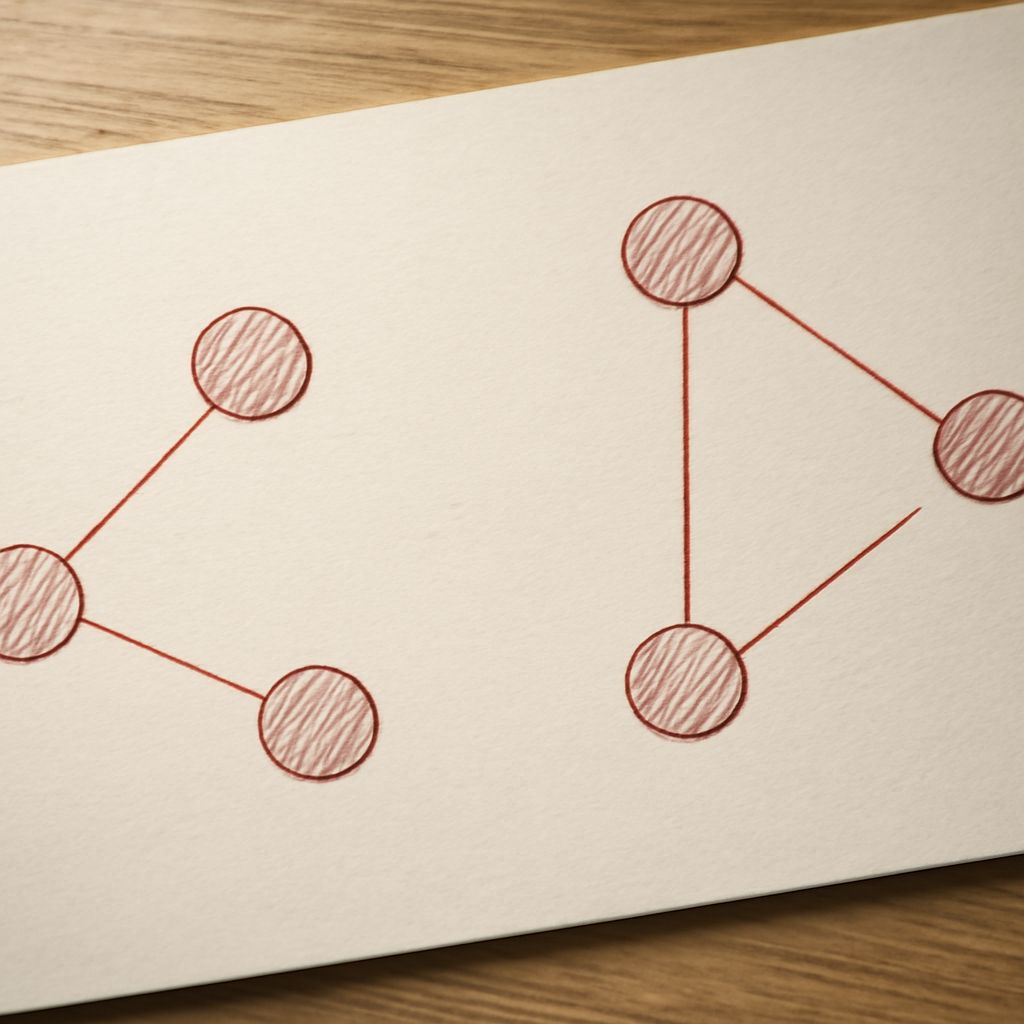
The union-find algorithm, also known as the disjoint-set data structure, is a crucial component in the field of computer science, particularly in the realm of network connectivity. This algorithm efficiently handles the dynamic connectivity problem, which involves determining whether two elements are in the same connected component and merging components when needed. Its efficiency stems from an elegant combination of operations that ensure union and find operations can be executed in nearly constant time.
What is the Union-Find Algorithm?
The union-find algorithm is a data structure that keeps track of a partition of a set into disjoint subsets. It provides two primary operations: find and union. The find operation identifies the subset a particular element is part of, while the union operation merges two subsets into a single subset. This algorithm is particularly renowned for its ability to manage these operations efficiently, even as the number of elements grows large.
The algorithm is often implemented using trees, where each subset is represented by a tree and each element points to a parent. The root node of each tree serves as the representative of the subset. In practice, the algorithm supports a technique called path compression, where the find operation flattens the structure of the tree whenever it is executed, ensuring that future operations are faster. Another optimization is the union by rank, which attaches the shorter tree under the root of the taller tree, minimizing the height of the trees involved.
How Does the Union-Find Data Structure Work?
The workings of the union-find data structure can be broken down into two primary operations: find and union.
- Find Operation: The find operation determines the root of the tree containing a specific element. Using path compression, it traverses up the tree to find the root and makes each node on the path point directly to the root. This operation ensures that trees remain shallow, thus speeding up subsequent operations.
- Union Operation: The union operation merges two different sets. This is accomplished by linking the roots of the two trees. The union by rank ensures that the tree remains balanced by always attaching the shorter tree to the taller tree. This approach reduces the maximum depth of the trees, leading to more efficient find operations.
By combining path compression and union by rank, the union-find algorithm achieves a time complexity of nearly O(1) for both union and find operations, making it highly efficient for large datasets.
Real-World Applications of the Union-Find Algorithm
The union-find algorithm finds numerous applications across various domains due to its efficiency in managing dynamic connectivity. Some of the notable applications include:
- Network Connectivity: In computer networks, the algorithm is used to manage dynamic connections between nodes, determining whether two nodes are in the same network or need to be connected.
- MST (Minimum Spanning Tree) Algorithms: The algorithm is integral to Kruskal’s algorithm for finding the minimum spanning tree of a graph. It helps efficiently determine whether adding an edge will form a cycle in the growing spanning tree.
- Image Processing: In image segmentation, the union-find algorithm helps in identifying and merging connected components within an image, which is crucial for object detection and recognition.
- Social Network Analysis: It is used to find communities or clusters within social networks, identifying groups of individuals that are all connected to each other.
These applications highlight the versatility of the union-find algorithm, underscoring its importance in solving complex problems involving connectivity and component merging.