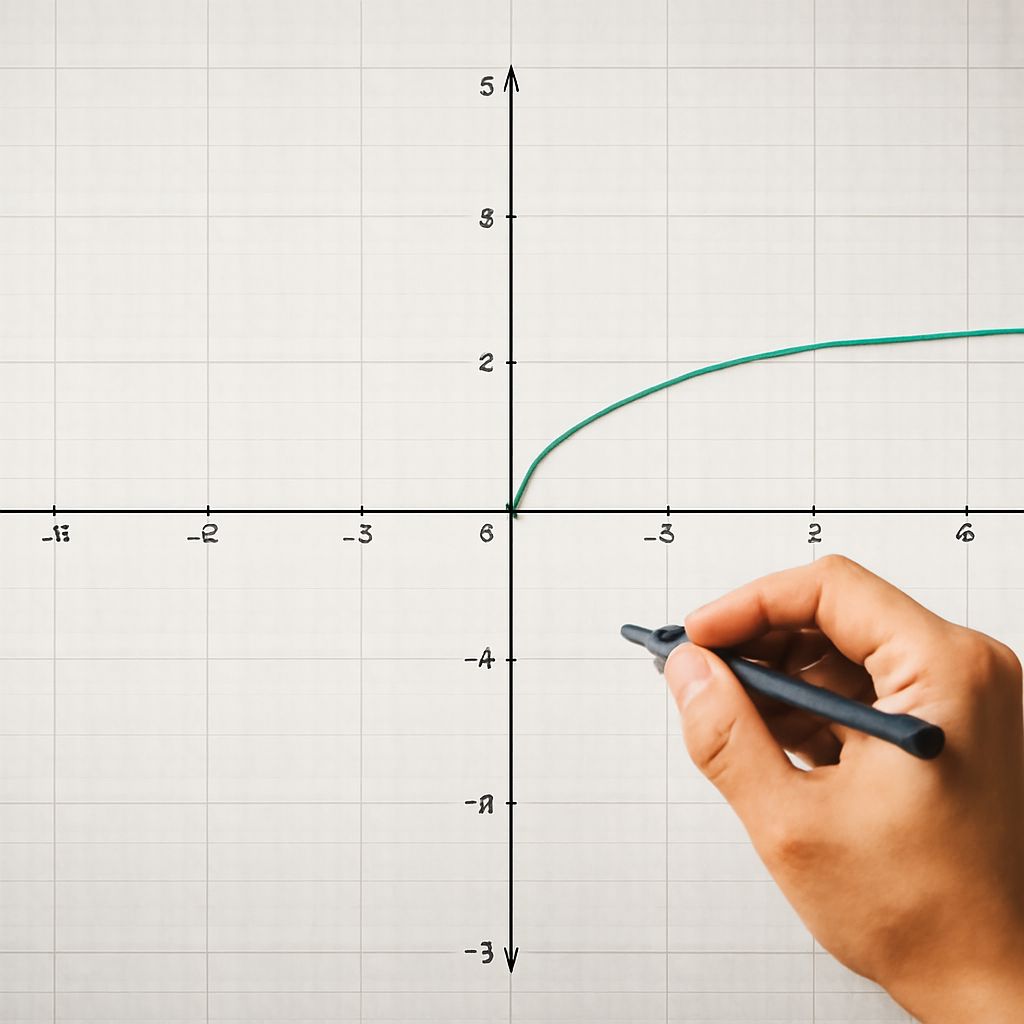
The logarithm function, commonly expressed as logn, plays a pivotal role in mathematics and computer science. It is widely used to simplify complex multiplicative tasks and is integral to understanding algorithm efficiency. This article delves into the essence of the logarithm function, its properties in algorithmic contexts, and its practical applications across various fields.
What is the logn Function?
The logn function represents the logarithm of a number n to a specified base. In most computer science contexts, the base is typically 2, noted as log2n. The logarithm of a number is the exponent to which the base must be raised to produce that number. For example, log28 equals 3 because 23 = 8. This function is instrumental in converting multiplicative processes into additive ones, simplifying complex calculations.
Properties of logn in Algorithms
The logn function is crucial in algorithm analysis, especially in evaluating time complexity. Algorithms with logarithmic time complexity, denoted as O(logn), are highly efficient as they significantly reduce the number of operations needed to process data.
One primary property is its ability to break down problems through repeated halving. Binary search algorithms, for instance, leverage this property to efficiently search sorted data by dividing the dataset in half repeatedly until the target is found. This results in a time complexity of O(logn), demonstrating optimal performance compared to linear or quadratic approaches.
Another important property is its additive nature in the context of multiplied numbers. If two numbers are multiplied, their logarithms add up. This property is beneficial when dealing with large datasets, as it simplifies multiplicative operations to additions, which are computationally less expensive.
Practical Applications of logn
The logarithm function, logn, finds practical use in several areas:
- Data Structures: Logarithms optimize operations in data structures such as balanced trees. For instance, search, insert, and delete operations in balanced binary search trees, like AVL or Red-Black trees, operate with O(logn) complexity, ensuring efficiency even with large datasets.
- Algorithm Design: Divide and conquer algorithms frequently use logarithmic concepts. QuickSort and MergeSort, for instance, utilize these principles to achieve a time complexity of O(n logn), which is optimal for sorting large datasets.
- Information Theory: Logarithms help quantify information. The concept of information entropy uses logn to measure the uncertainty or surprise associated with random variables, crucial in fields like cryptography and data compression.
- Complexity Analysis: Logarithms aid in evaluating complexity beyond just time. Space complexity, particularly in recursive algorithms, often involves logarithmic calculations to determine memory usage efficiency.
In sum, the logn function is indispensable in optimizing and analyzing complex systems. Its properties and applications underscore its importance in computational efficiency and practical problem-solving across multiple domains.